The short answer
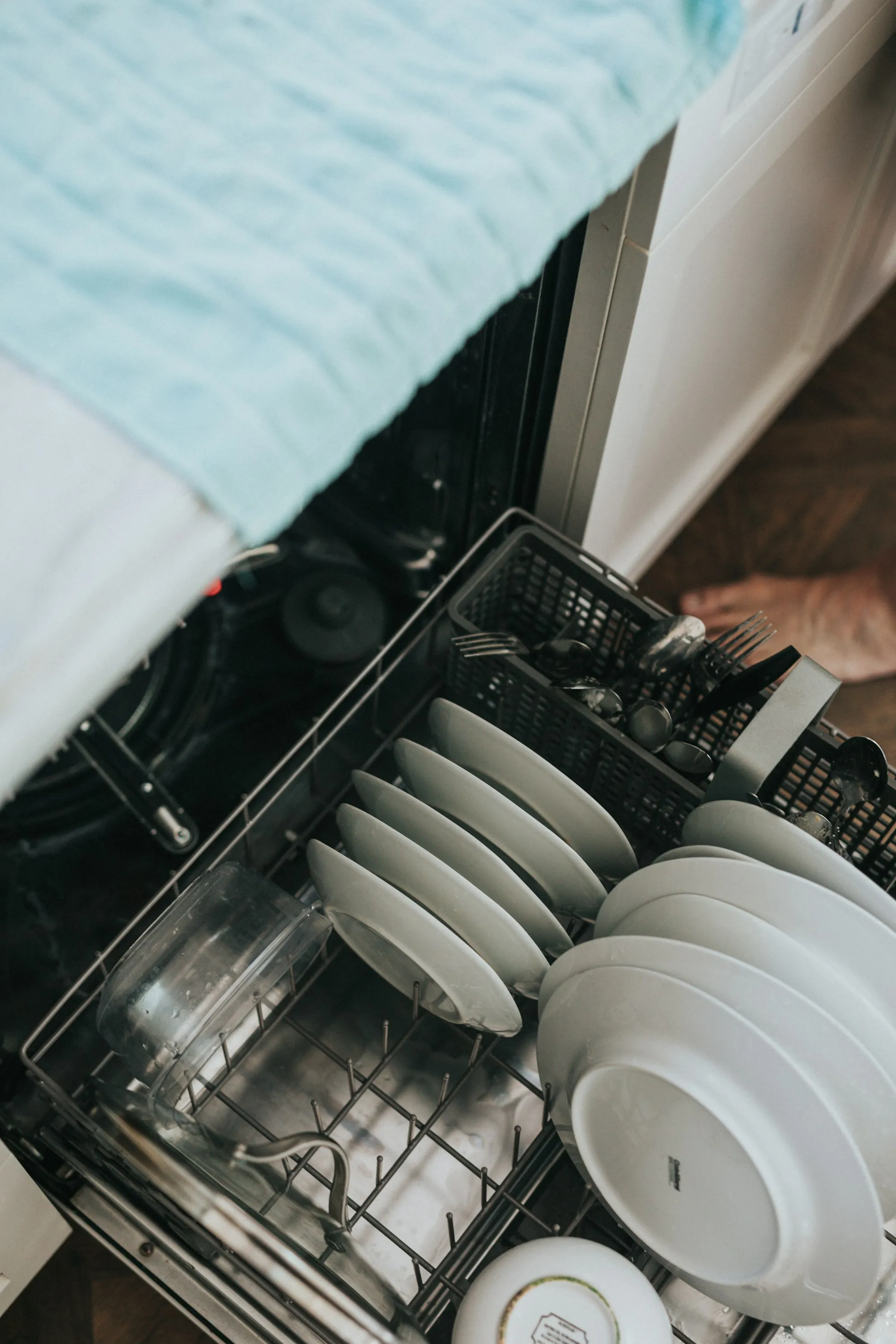
Most dishwashers that will not drain have a clogged filter. Turn off the power, twist out the filter under the lower spray arm and rinse it. If that does not fix it, check the air gap on the counter, run the garbage disposal, look for a kinked drain hose under the sink and listen to the drain pump. A humming pump with no water moving usually means something is jammed in it.
Opening the dishwasher to find a pool of cloudy water in the bottom is frustrating, especially if the dishes are not clean either. The good news is that a dishwasher not draining is often caused by something simple. Before you assume the drain pump is gone, there are several things worth checking.
This guide walks through the seven causes we find most often when we are called out for dishwasher repair in Belmont and the cities around it, in the order we usually check them. It also covers what the sounds and codes are telling you and how to keep it from happening again.
How a dishwasher drains
A dishwasher drains in a few stages. Water passes through a filter at the bottom of the tub, then into a sump where a drain pump pushes it out through a hose. That hose either rises to an air gap on the countertop or loops high under the sink before connecting to the sink drain or the garbage disposal. A blockage or failure anywhere along that path leaves water in the tub.
Knowing that path makes it easier to troubleshoot. You start at the tub and work outward: filter, sump, pump, hose, air gap, disposal, sink drain.
Quick diagnosis chart
| What you notice | Most likely cause | Where to start |
|---|---|---|
| Dirty water covering the tub floor | Clogged filter | Cause 1 |
| Water spilling from the cap by the faucet | Clogged air gap | Cause 2 |
| Dishwasher never drained since a new disposal | Knockout plug still in place | Cause 4 |
| Kitchen sink also drains slowly | Clogged sink drain | Cause 5 |
| Humming during the drain step, no water moving | Jammed drain pump | Cause 6 |
| Grinding or rattling during the drain step | Debris in the pump | Cause 6 |
| No sound at all at the drain step | Failed pump or control | Causes 6 and 7 |
| Sour smell and standing water | Food trapped in filter or hose | Causes 1 and 3 |
Before you start
- Turn off the power. Switch off the dishwasher at the breaker, or unplug it under the sink if it plugs in.
- Have towels and a shallow container ready. You may need to bail out some water.
- Wear gloves. Filters can hold glass and sharp bits.
- Try a cancel and drain first. On many dishwashers, pressing and holding Start or Cancel for a few seconds runs a short drain. If the water goes down, the problem may come and go. If it does not, keep reading.
1. A clogged filter
This is the most common cause by far. Most modern dishwashers have a cylindrical filter under the lower spray arm that twists out. Food, labels, fruit pits and small pieces of glass collect there. When it clogs, water cannot reach the pump.
What to do: remove the lower rack, twist out the filter, rinse it under warm water and scrub it gently with a soft brush. Wipe out the sump area below it. Many manufacturers suggest cleaning the filter monthly, and more often if you do not rinse dishes before loading.
2. A clogged air gap
If you have a small chrome or plastic cap on the countertop next to the faucet, that is the air gap. It stops dirty sink water from flowing back into the dishwasher. It can clog with food and stop the dishwasher from draining. Sometimes you will see water spilling out of it during a cycle.
What to do: lift off the cap, remove the inner cover and clear out any debris. Running a bottle brush through it helps.
3. A kinked or clogged drain hose
The drain hose runs from the dishwasher, under the cabinet, to the sink drain or disposal. If the dishwasher was pushed back hard during installation or something under the sink got shoved against it, the hose can kink. It can also clog with grease and food.
What to do: look under the sink for kinks or sharp bends. If you are comfortable doing so, loosen the clamp at the disposal or drain end and check whether the hose is clear. Have a bucket ready.
The high loop matters
If there is no air gap on the counter, the drain hose should rise as high as possible under the counter before it drops down to the drain. This high loop stops sink water from flowing back into the dishwasher. A hose that lies flat on the cabinet floor can let dirty water siphon back, which causes standing water and smells even when the pump works fine. Securing the hose up high with a strap or clip is a simple fix.
4. The garbage disposal
If the dishwasher drains into a garbage disposal, a full or clogged disposal can block it. Run the disposal with cold water for 20 to 30 seconds and try the dishwasher again.
If your disposal is brand new and the dishwasher has never drained properly since, the knockout plug inside the disposal’s dishwasher inlet may still be in place. Installers are supposed to remove it, but it is sometimes missed. This needs the disposal disconnected to fix.
5. A clogged sink drain
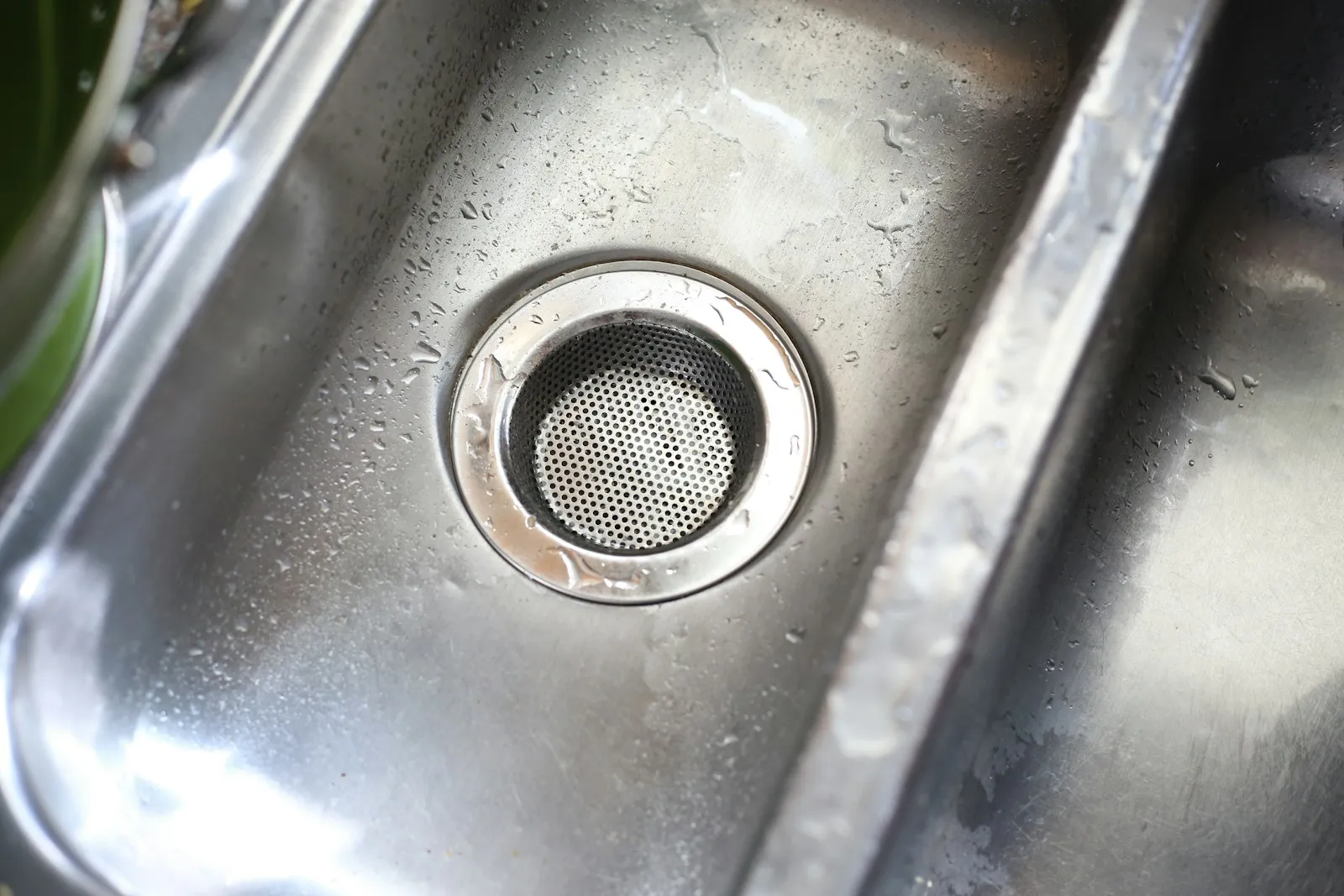
If the kitchen sink itself is draining slowly, the dishwasher has nowhere to go. A partly blocked sink drain can let the sink drain slowly while still stopping the dishwasher. This is a plumbing issue rather than an appliance one.
6. A jammed or failed drain pump
If the filter, air gap, hose and drain are all clear, the pump is the next suspect. Listen during the drain part of a cycle. A humming sound with no water moving often means something is jammed in the pump impeller, such as a shard of glass, a pit or a bone. A grinding sound means debris is inside. No sound at all may mean the pump has failed or is not getting power.
What we do: remove the pump or open its cover to clear the impeller, test the pump motor and check that the control is sending power to it during the drain step. Pump replacement is a common, affordable repair.
On many Bosch models, the drain pump has a small cover under the filter that you can pop off to check the impeller. If you try this, turn off the power first, wear gloves and use a spoon to lever the cover up. Broken glass often ends up here.
7. A control or sensor fault
Less often, the pump and drain path are fine but the control is not running the drain step correctly, or a float or sensor is reporting the wrong level. A door latch that does not fully engage can also stop a cycle before it reaches the drain step. This needs testing with a meter and is best left to a technician.
Drain error codes by brand
Many dishwashers show a code when they cannot drain. These are the ones we see most in Peninsula kitchens:
- Bosch E24: a drain restriction. Check the filter, the drain hose, the air gap and the disposal.
- Bosch E25: the drain pump is blocked. Check the pump cover under the filter.
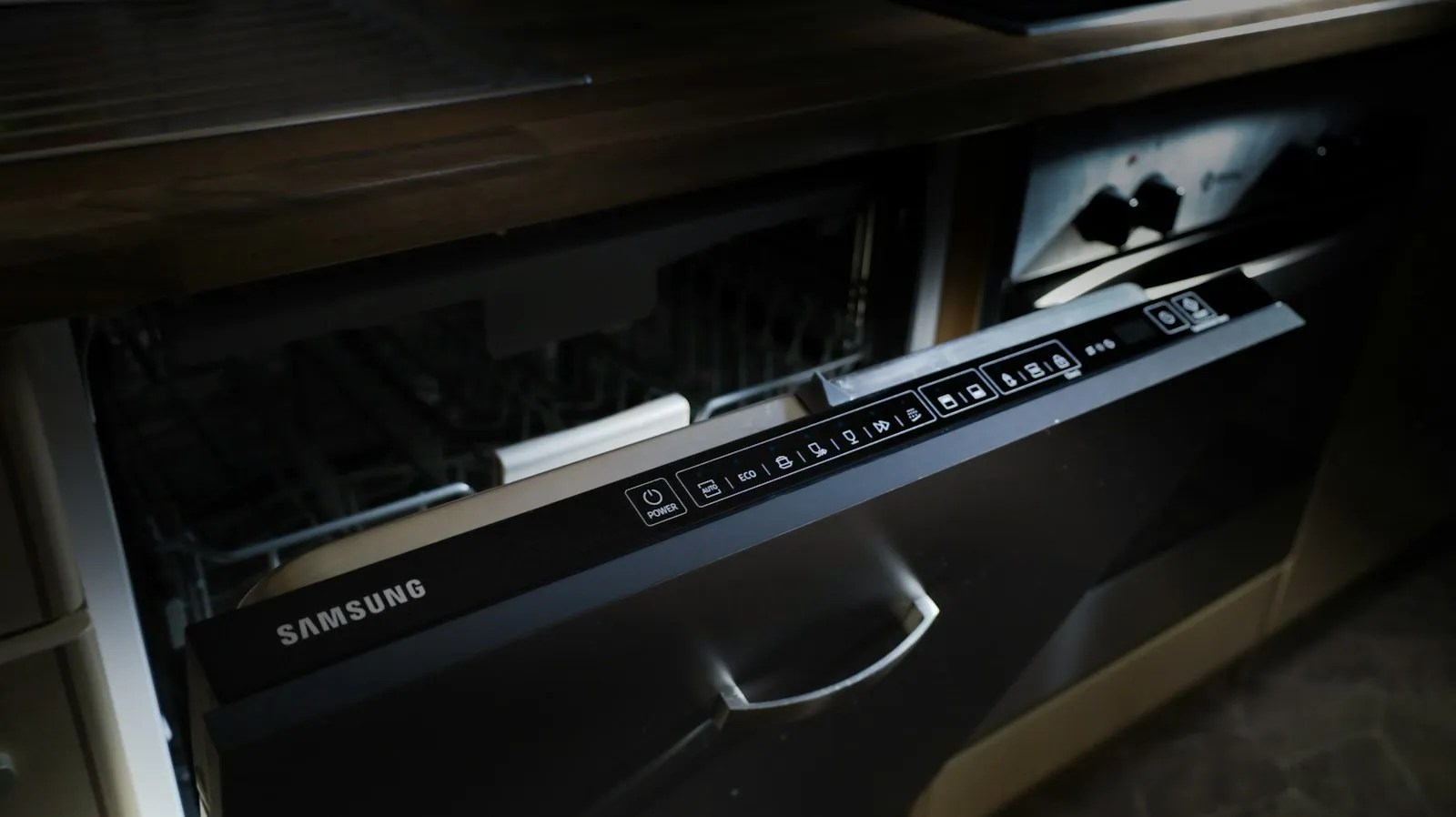
- Samsung 5C or 5E: a drain error. Start with the filter and the drain hose.
- LG OE: a drain error. Clean the filter and check the hose and disposal connection.
- Lights that blink in a pattern: some Whirlpool, KitchenAid and GE models flash the Clean or Start light in a set pattern instead of showing a code. The pattern is listed in the model’s tech sheet, which is often tucked behind the kick plate or in the door.
Codes and patterns vary by model, so the model number is the best guide. You will find it on a label along the edge of the door or the side of the tub.
What about Bosch dishwashers?
Bosch dishwashers are the most common brand we see in Belmont kitchens, and they have a leak protection system with a float in the base pan. If water gets into that pan, the dishwasher shows E15 and runs its drain pump to protect the floor. That is a different problem from a normal drain blockage, though the two can be linked. Our guide to the Bosch dishwasher E15 error covers it in detail.
How to clean a dishwasher filter properly
Since the filter is the most common cause, it is worth doing well:
- Turn off the dishwasher and pull out the bottom rack.
- Find the filter under or near the lower spray arm. On most models it twists counterclockwise and lifts out. Some have a separate flat mesh filter below the cylinder.
- Rinse both parts under warm running water. Use a soft brush or an old toothbrush to clear the fine mesh. Avoid wire brushes, which can tear it.
- Wipe out the sump below the filter with a paper towel and remove any glass, labels or seeds you find.
- Put the filter back and lock it firmly in place. A filter that is not locked can let debris reach the pump.
Doing this once a month keeps drainage steady and helps the dishwasher clean better too, because the wash water is not recirculating through a clogged screen.
Smells, standing water and what they tell you
A small amount of clear water in the sump after a cycle is normal on many dishwashers. It keeps the seals from drying out. A pool of cloudy or dirty water covering the bottom of the tub is not.
A sour or rotten smell usually means food is trapped in the filter, the sump or the drain hose. If the dishwasher drains into a disposal without an air gap or a high loop, dirty water from the sink can flow back into the dishwasher, causing both smells and standing water. The fix is to make sure the drain hose rises to the underside of the counter before it drops to the drain, or to install an air gap.
Dishwasher not draining and not cleaning
The two problems often show up together. When water cannot drain, the dishwasher recirculates dirty water through the spray arms, and the dishes come out gritty or cloudy. Once the drain problem is fixed, check these as well:
- Spray arm holes. Pull the spray arms off and clear the small holes with a toothpick.
- Hot water at the start. Run the kitchen tap until it is hot before starting a cycle.
- Detergent. Use fresh dishwasher detergent in the right amount. Old powder that has clumped in the box does not dissolve well.
- Loading. Large pans and cutting boards can block the spray arms or the detergent door.
Preventing a dishwasher drain problem
- Scrape food into the trash before loading. You do not need to pre-rinse with most modern detergents, but large scraps, labels and bones should not go in.
- Clean the filter every month.
- Run the garbage disposal before starting the dishwasher.
- Run the kitchen tap until the water is hot before starting a cycle, which helps dissolve grease.
- Use the right detergent. Hand dish soap in a dishwasher creates suds that can overflow and confuse sensors.
- Do not pour cooking grease down the sink. It builds up in the drain the dishwasher shares.
- Take jar labels off before washing. Paper labels break into pulp that clogs filters fast.
A similar problem in the laundry room
Washing machines fail to drain for very similar reasons: a clogged filter, a jammed pump or a kinked hose. If your washer has water left in the drum, see our page on washer not draining repair. And if a washer is showing an OE or similar code, our LG washer error codes guide explains what it means.
When to call us
Call us if you have cleaned the filter, checked the air gap and the hose, run the disposal and the dishwasher still will not drain, or if you hear the pump humming without moving water. We repair dishwashers across Belmont and nearby cities, including Hillsborough, San Carlos and Atherton. Our phones are answered 24/7, with same-day visits in most cases. You can find more guides on the appliance repair blog.
Frequently Asked Questions
Is it normal to have some water in the bottom of the dishwasher?
A small amount of clear water in the sump, the low area under the filter, is normal on many models. It keeps the seals from drying out. A layer of cloudy or dirty water covering the bottom of the tub after a cycle is not normal and means the dishwasher is not draining fully.
How do I drain standing water from my dishwasher?
Turn off the power first. Lay towels on the floor, then use a cup to bail the water into a bucket and soak up the rest with a sponge or towel. Once the water is low enough, remove the filter and clean it. Never use a wet vacuum or reach into the sump with the power on.
Can I use drain cleaner in my dishwasher?
No. Chemical drain cleaners can damage the pump, seals and plastic parts in a dishwasher, and they can splash back when the dishwasher starts again. If the sink drain is clogged, clear it mechanically or call a plumber. For the dishwasher itself, clean the filter and air gap by hand.
Why does my dishwasher drain into the sink?
If dirty water comes up in the sink when the dishwasher drains, the sink drain or the garbage disposal is partly blocked, so the water has nowhere to go but back up. Run the disposal and clear the sink drain. If water spills from the air gap on the counter, the air gap or the hose after it is clogged.
How long should a dishwasher take to drain?
The drain step itself usually takes a minute or two, and most dishwashers drain several times during a cycle. If you hear the pump run for a long time with little water moving, or the cycle stalls at the drain step, something in the drain path is restricted.
Why did my dishwasher stop draining after a new garbage disposal was installed?
The most likely reason is the knockout plug. New disposals have a plastic plug sealing the dishwasher inlet, and it has to be knocked out before the dishwasher hose is connected. If it was missed, the dishwasher cannot drain at all. The disposal has to be disconnected to remove it.
Is a dishwasher drain pump worth replacing?
Usually, yes. A drain pump is a common, affordable part, and on a dishwasher that is otherwise in good shape it can add years of use. Many jammed pumps do not need replacing at all. Clearing a piece of glass or a fruit pit from the impeller often restores normal draining.
Do you repair dishwashers that will not drain in Belmont?
Yes. A dishwasher that will not drain is one of the most common calls we take in Belmont, San Carlos, Hillsborough and Atherton. Our phones are answered 24/7, with same-day visits in most cases.